
Why Australia didn’t digitise in the 2000s and what AI has finally made obvious
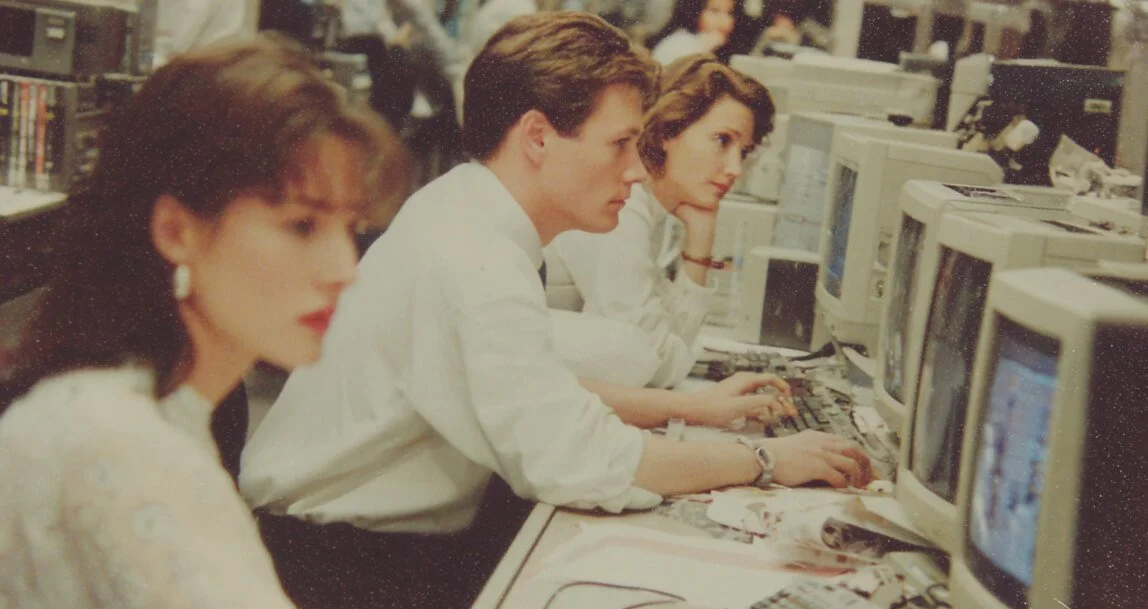
In the mid 2000s, “Digital Transformation” was the corporate buzzword of the moment. All those years ago when I worked at PwC, there were strategy decks about “going paperless,” futurist keynotes at conferences, and ambitious-sounding IT transformation projects.Yet for all the talk, most organisations in Australia, and elsewhere, never really did it. Not properly. Not consistently. And certainly not with much enthusiasm
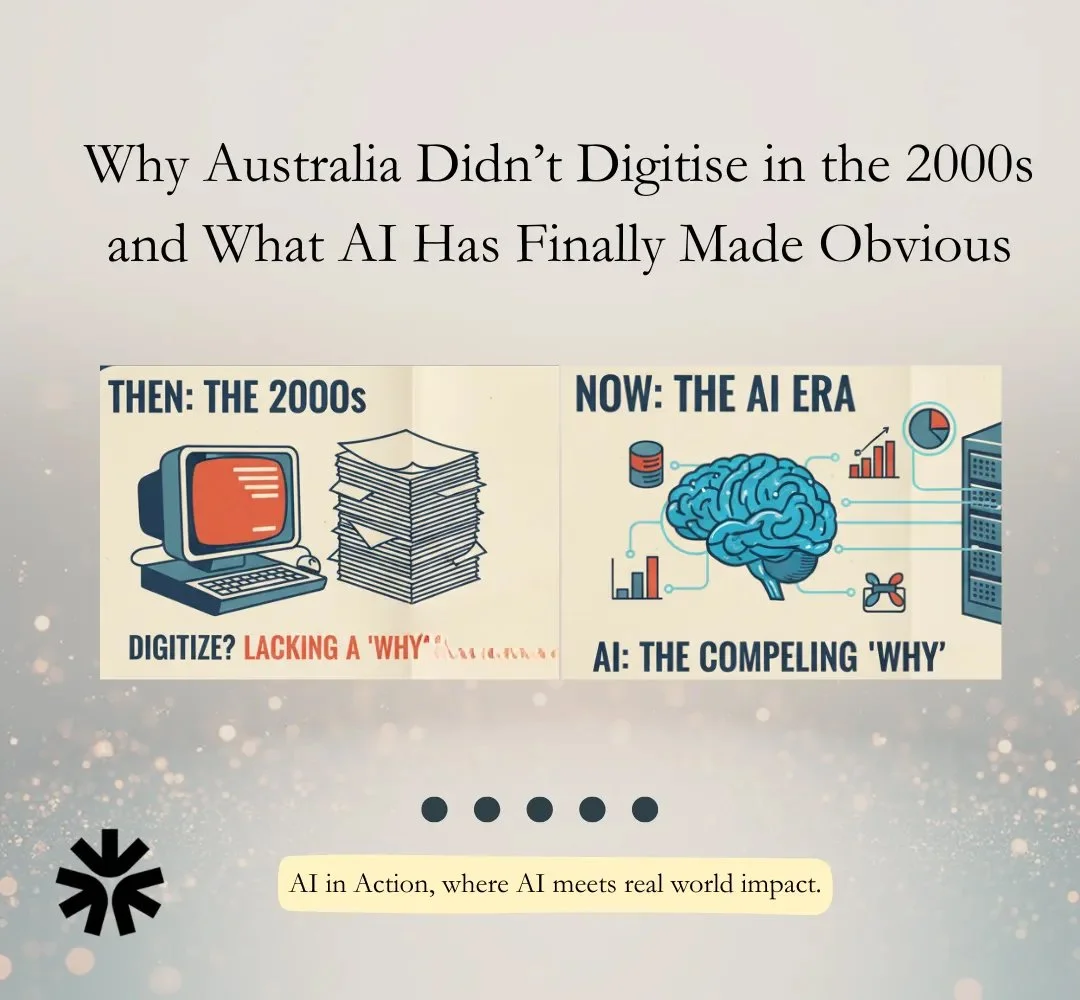
Because No One Knew Why They Were Doing It
Sure, digitisation sounded clever. Progressive even.
But what did it actually deliver? Faster filing cabinets? Slightly shinier databases? Marginally less time spent feeding the office printer?
Without a compelling why, it all felt like effort without reward. A bit like signing up to a gym, only to spend your lunch break wiping down equipment you never used.
The truth is, for many leaders, digitisation looked like a lot of work… for very little perceptible gain.
Now Fast Forward: Enter AI
And now suddenly, everything makes sense.
Now, all that data we’ve (reluctantly) been collecting? It has purpose. The process maps, the forms, the structured workflows? They have meaning.
Because now, we can feed them into systems that learn, predict, recommend, adapt and work with us, not just for us.
The “Horsepower” Problem
Back in the Industrial Revolution, when James Watt introduced the steam engine, people didn’t immediately understand how powerful it was. So he translated it into something familiar: horsepower.
“This machine,” they would say, “can do the work of fifteen horses.”
And today, we’re still doing the same thing.
The first question most business leaders ask when they hear about AI is: “How many people can it replace?”
It’s the 21st-century equivalent of “how many horses?” Understandable, but tragically limited.
Because AI isn’t about replacement. It’s about liberation.
It frees your people from the digital equivalent of mucking out the stables , the repetitive, low-value tasks that drain energy and morale.
So, Why Didn’t We Digitise Then?
Because we didn’t have the story yet.
We didn’t have the narrative, the metaphor, the felt sense of value.
Now that AI is here, the story writes itself.
We digitise not to tick a box, but to unlock something better. Not to replace people, but to elevate them. Not to save costs, but to create capacity.
What to Ask Now
So instead of asking:
“How many people can we replace with AI?”
Try asking:
✅ What soul-destroying tasks could AI eliminate?
✅ What untapped ideas could our team explore if they had more time?
✅ What kind of company could we become — if people weren’t crying softly into spreadsheets?
Because the real value of AI isn't efficiency. It’s potential.
And maybe — just maybe — we finally understand why we should have digitised all those years ago.
I’d love to hear your thoughts — is your organisation still asking “how many horses,” or are you asking better questions now?
By focusing on people first, AI can become a tool for empowerment rather than disruption. How is your organisation ensuring AI works for employees, not against them?
AI adoption is not a one-time rollout, it’s an ongoing leadership responsibility. The organisations that will thrive are the ones that invest in people as much as platforms, building confidence, capability and trust at every stage of the journey.
If you want to equip your leaders and workforce to navigate AI with clarity and confidence, Fiona delivers keynotes that translate complex change into practical action. Her sessions help organisations move beyond hype and build human-first AI strategies that actually work.
👉 Book Fiona to speak at your next event and start turning AI ambition into real-world adoption.